What to Do When Your Heat Goes Out in a Chicago Polar Vortex
Heat out during a Chicago polar vortex? Here's the exact order of steps to stay warm, stop pipes from freezing, and get emergency furnace repair fast.
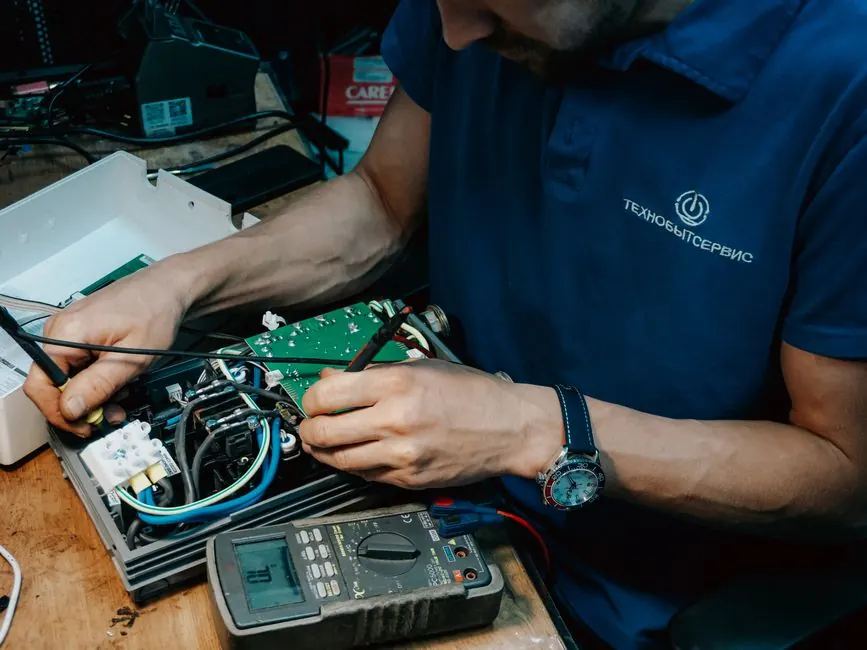
When your heat goes out in a Chicago polar vortex, the first move is to call for emergency heating repair and the second is to protect your pipes - in that order, because a technician's arrival time is the variable you cannot control and a burst pipe is the damage you can prevent. Heat goes out Chicago polar vortex situations are survivable in a well-prepped home, but the margin between "uncomfortable night" and "$8,000 water damage claim" is usually about four hours of cold. Below is the exact sequence we walk Chicago homeowners through on the phone at 2 a.m. in January, plus what it costs, what your landlord owes you, and when to stop troubleshooting and hand it to a pro.
The First 30 Minutes: Do These Six Things
Your first 30 minutes determine whether this stays an inconvenience or turns into a repair bill with a second repair bill attached. Work through these in order - none of them require tools.
- Call for emergency service before you troubleshoot. Dispatch queues during a polar vortex fill up fast. On the worst nights in Chicago, we run 40 to 60 no-heat calls and the last caller waits until morning. Get in line, then diagnose while you wait.
- Check the thermostat batteries and the breaker. Roughly one in ten "no heat" calls we run ends with a thermostat that lost power or a tripped breaker on the furnace circuit. Two minutes to rule out.
- Check the furnace filter. A filter packed solid with dust can push a furnace into a high-limit lockout. If it looks like a felt blanket, pull it and see if the unit fires.
- Confirm you have gas. If your stove burners won't light either, the problem is supply-side, not your furnace - call Peoples Gas, not us.
- Open cabinet doors under every sink. This is free pipe insurance. Kitchen and bathroom cabinets on exterior walls run 10 to 15 degrees colder than the room.
- Pick one room and concentrate heat there. Close doors to unused bedrooms. You are heating a lifeboat, not the whole ship.
If the furnace is running but blowing cold, if you smell gas, or if you see a flashing error code you don't recognize, stop and wait for the technician. Gas odors mean you leave the house and call 911 first, us second.
How Long Can a Chicago Home Go Without Heat in Winter?
A Chicago home can typically go 8 to 12 hours without heat before interior temperatures drop into the 50s, and 24 to 48 hours before you're looking at real pipe-freeze risk - but those numbers collapse fast when the outdoor air hits the minus-20s, which is exactly what a polar vortex delivers. Indoor temperature falls roughly 1 to 3 degrees per hour in a modern, insulated home and 3 to 5 degrees per hour in an older brick two-flat with original single-pane windows.
Here's the math that matters. Pipes begin to freeze when the surrounding air sits at 20°F or below for several hours. A north-facing wall cavity in a pre-war Chicago building can hit that threshold while the room itself still reads 58°F on your thermostat. That's why the burst pipe usually happens in the wall behind the kitchen sink, not in the room where you're sleeping.
Two factors buy you time: thermal mass and occupancy. A masonry building holds heat longer than a frame house. A full house - bodies, cooking, showers - generates 2 to 3 degrees of its own warmth. If you're leaving for a hotel, drop the thermostat no lower than 55°F and leave the cabinet doors open.
How to Keep Pipes From Freezing When the Heat Goes Out in Chicago
Frozen pipes are the expensive half of a no-heat emergency, and the fix is mostly about keeping moving air off the plumbing. Water in a closed pipe freezes and expands about 9 percent by volume, which is more than copper or PEX wants to tolerate.
Do this:
- Open every cabinet door under sinks on exterior walls and leave them open.
- Let faucets drip - a pencil-lead stream, hot and cold sides. Moving water freezes far more slowly than still water.
- Point a box fan at the open cabinets to circulate room air across the pipes.
- If you have a space heater, aim it at the wall under the sink from 3 feet away, never inside the cabinet.
- Locate your main water shutoff now, before you need it. In most Chicago homes it's in the basement near the front wall or under the front stairs.
If a pipe does freeze, do not pour boiling water on it and do not use an open flame. A hair dryer on low, a heat lamp, or towels soaked in warm water work. If you hear a hiss or see water where it shouldn't be, shut the main valve and call us - thawing a line that's already split just turns a drip into a flood.
Older buildings in Logan Square HVAC company territory are the worst offenders we see for this. Century-old galvanized supply lines, uninsulated exterior wall cavities, and basement laundry rooms that never got properly heated - we've thawed more kitchen lines in those greystones than anywhere else in the city.
Space Heater Safety During a Chicago Cold Snap
Space heaters cause roughly 1,700 house fires a year nationally, and most of them happen on exactly the kind of night you're reading this. Used correctly, an electric space heater is the single best tool you have. Used wrong, it's a bigger problem than the cold.
The rules we give every customer:
- Electric only. Never bring a propane or kerosene heater indoors - carbon monoxide kills quietly and fast in a sealed Chicago apartment.
- Plug directly into a wall outlet. No extension cords, no power strips. A 1,500-watt heater pulls 12.5 amps and will melt a cheap cord.
- Keep 3 feet of clearance on all sides. No blankets, no curtains, no drying laundry on top.
- Never leave one running while you sleep or leave the house.
- One heater per circuit. Two on the same breaker is how you lose power to the furnace too.
If you have a gas oven, do not use it to heat the apartment. It's a carbon monoxide source, and the risk goes up sharply when the furnace that normally handles combustion air is offline.
Common Mistakes Homeowners Make During a Polar Vortex
The mistakes that turn a $400 repair into a $4,000 one are almost always the same four, and we hear them on the phone every cold snap.
Waiting until morning. A furnace that failed at 9 p.m. is a furnace that's been sitting in a 40°F basement for eight hours by sunrise. The longer the unit sits cold, the more likely a cracked heat exchanger or a condensate line that's frozen solid becomes part of the diagnosis.
Resetting the breaker over and over. If the breaker trips twice, there's a reason - a shorted ignitor, a failing blower motor, a control board fault. Cycling it a third time is how you turn a $250 ignitor into a $1,200 board replacement.
Running the furnace with a blocked flue. Snow and ice can cap a high-efficiency furnace's PVC intake and exhaust pipes on the side of the house. If the unit short-cycles every few minutes, go outside and check. Clear the pipes with a broom, never a shovel.
Ignoring the carbon monoxide detector. If it chirps or alarms, get everyone outside and call 911. Do not open windows and go back to bed.
Renters: No Heat in a Chicago Apartment and Landlord Responsibility
In Chicago, a landlord must provide heat from September 15 through June 1, maintaining 68°F during the day and 66°F overnight - that's the city's Residential Landlord and Tenant Ordinance, and it applies to nearly every rental unit in the city. If your heat is out and your landlord won't respond, you have real options.
Call 311 and file a complaint with the Department of Buildings. An inspector can issue a violation, and in serious cases the city can arrange repairs and bill the owner. Document everything - texts, timestamps, indoor temperature readings - because a polar vortex is exactly when a landlord's failure to act becomes a legal problem for them, not you.
What you should not do is wait. A landlord who is "working on it" at 11 p.m. on a minus-15 night is a landlord who is not working on it. Call your own emergency HVAC company, keep the receipt, and pursue reimbursement through the ordinance. Many Chicago renters we've helped have recovered the full cost.
When to Call a Professional
Call a professional the moment you've ruled out the thermostat, the breaker, the filter, and the gas supply - that's the point where the remaining causes are all hands-on repairs. Ignitors, flame sensors, inducer motors, control boards, and heat exchangers are not DIY territory, and on a polar vortex night they're not something you want to learn on.
Our team at HVAC Chicago Pro runs no-heat calls across the city all winter, and we carry the parts that fail most on Chicago furnaces - ignitors, flame sensors, and inducer assemblies - on every truck. When we arrive, we diagnose the unit, tell you the price before we start, and get your heat back on the same visit whenever the part is on the truck.
If your furnace is 15 years or older and this is the second or third failure in two winters, the honest conversation is about replacement rather than another repair. A furnace repair Chicago IL call on a 20-year-old unit is often a bridge to a furnace replacement Chicago IL you'll need anyway - and it's better to make that decision in October than at 3 a.m. in January. Typical 2026 pricing in Chicago runs $150 to $450 for common repairs and $3,800 to $7,500 installed for a standard-efficiency replacement, with high-efficiency condensing units landing higher.
For the broader picture of what we do across the city, our heating and air conditioning Chicago service covers furnace, boiler, and heat pump work in every neighborhood we serve.
Frequently Asked Questions
What should I do if my heat goes out during a Chicago polar vortex?
Call for emergency heating repair first, then protect your pipes. Open cabinet doors under sinks, let faucets drip, and concentrate heat in one room. Check the thermostat, breaker, filter, and gas supply while you wait. If you smell gas, leave the house and call 911 before calling anyone else.
Who do I call for emergency heating repair in Chicago, Illinois?
Call a licensed Chicago HVAC company that handles urgent no-heat service - not a general handyman. Most Chicago furnaces fail on ignitors, flame sensors, or inducer motors, and a technician with those parts on the truck can restore heat in 60 to 90 minutes. Have your furnace model number ready when you call.
How long can a house go without heat in a Chicago winter?
Plan on 8 to 12 hours before indoor temperatures drop into the 50s, and 24 to 48 hours before pipe-freeze risk becomes serious. During a polar vortex with outdoor air below minus 10°F, those windows shrink to roughly half. Older brick buildings with single-pane windows lose heat fastest.
How do I keep my pipes from freezing in Chicago IL when the heat is out?
Open cabinet doors under every sink on an exterior wall, let faucets drip on both hot and cold, and aim a fan or space heater at the wall from 3 feet away. Keep indoor temperature at 55°F or higher. Know where your main water shutoff is before you need it.
Does homeowners insurance cover furnace failure in Chicago?
Standard policies do not cover mechanical breakdown of the furnace itself - that's a wear-and-tear exclusion. They do cover the resulting damage if a frozen pipe bursts and floods the home, typically after your deductible. Some carriers offer optional equipment breakdown coverage for $50 to $150 a year.
Get Help With HVAC in Chicago
When the temperature is dropping and your furnace is silent, the fastest path back to heat is a phone call. We run emergency no-heat service across Chicago all winter, and we'll tell you exactly what's wrong and what it costs before we start.
Call HVAC Chicago Pro at (312) 638-0812 - day, night, or during the worst cold snap of the year.