For homes
We repair heat pumps in houses, two-flats, and condos across Chicago. You get a clear explanation of the fault and the fix before we start.
- Heat pump blowing cold air
- Outdoor unit iced over
- Mini split dripping water
When your heat pump quits in a Chicago winter, you need heat pump repair Chicago IL you can count on. Our techs handle mini split heat pump repair Chicago, defrost failures, refrigerant leaks, and no-heat calls across Cook County. We diagnose with gauges and a thermal camera, explain what failed, and fix it the same visit whenever parts allow.
 Defrost cycle testCharge verificationAirflow check
Every repair visit covers a full diagnostic and the fix itself, plus the checks that keep the system running after we leave. Here is what is standard on a heat pump call and what we quote separately if the job grows.
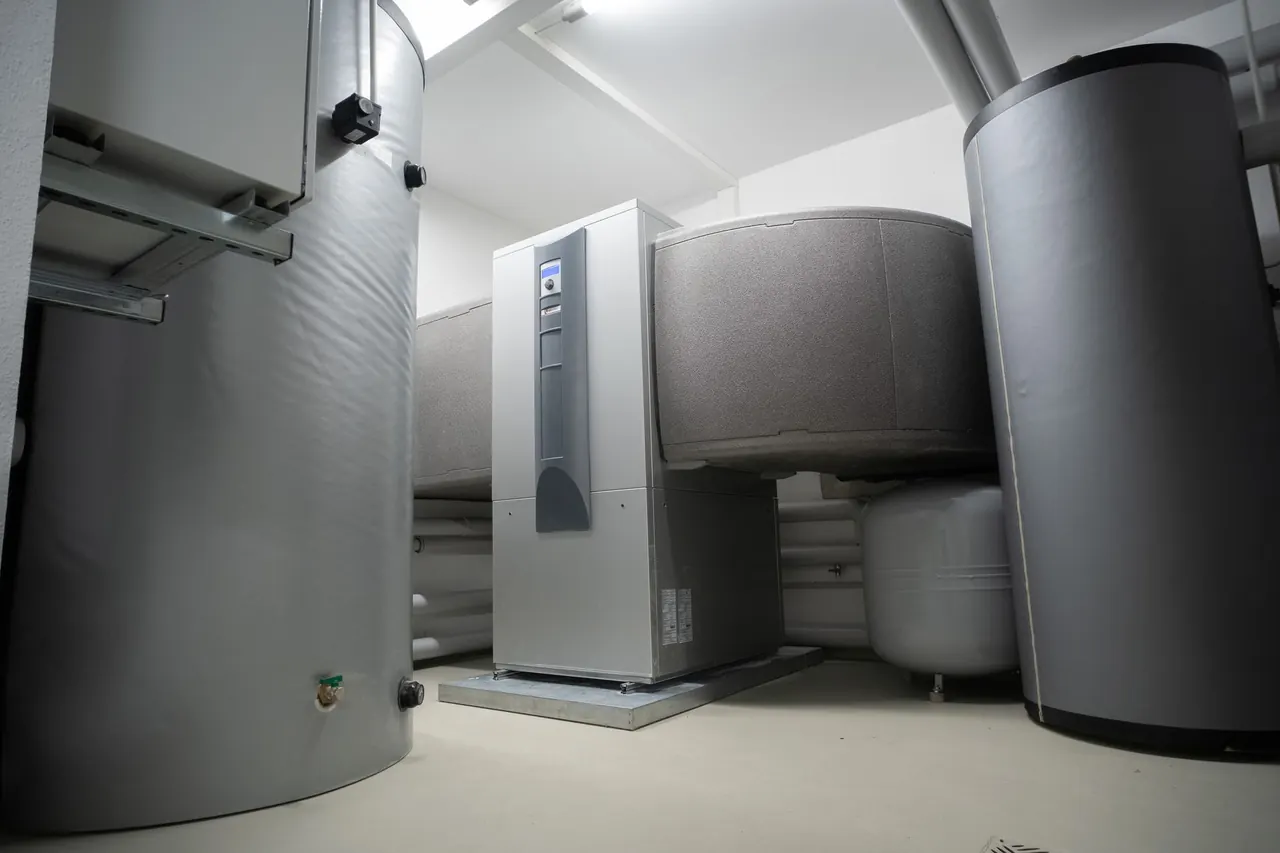
We inspect indoor and outdoor units, read refrigerant pressures, check amp draw on the compressor and blower, and test the defrost cycle. You get a clear explanation of the fault and the repair options before any work starts.
If charge is low, we use an electronic refrigerant leak detector to find the source rather than just topping off the system. We repair the leak, pull a vacuum with a vacuum pump, and recharge to the manufacturer's weight.
Failed run capacitors, stuck contactors, bad defrost boards, and thermostat miscalibration are common. We test with a digital multimeter and replace only the parts that fail, using components rated for your unit.
A clogged air filter or undersized return will starve any heat pump. We measure static pressure and airflow with an anemometer, then tell you the correct filter size and change interval for your system.
Before we leave, we run a full heating and cooling cycle and verify the temperature split at the registers. You see the before and after readings, and we note anything that should be watched next season.
The approach is the same for a home and a business. What changes is the access, the schedule and who needs the paperwork.
We repair heat pumps in houses, two-flats, and condos across Chicago. You get a clear explanation of the fault and the fix before we start.
We service heat pumps in rental buildings, small offices, and mixed-use properties. Work is scheduled around tenants and building access rules.
A plain-language look at what Heat Pump Repair involves and when it is needed.
See how it worksHeat pump repair Chicago IL is the diagnosis and correction of faults in an air-source or ductless heat pump so it heats and cools your home again. That covers refrigerant charge testing with a manifold gauge set, defrost board and reversing valve checks, blower motor and run capacitor replacement, and thermostat recalibration on Honeywell, Nest, and Ecobee controls. We work on Carrier, Trane, Lennox, Rheem, Goodman, Bryant, American Standard, Mitsubishi Electric, and Daikin equipment.
Chicago heat pumps work hard. Lake-effect humidity ices outdoor coils, and a failed defrost cycle leaves a unit frozen solid while the house drops into the fifties. If your heat pump is not working in winter Chicago Illinois, the cause is usually a bad sensor, low charge, or a clogged filter choking airflow. We see it in greystones, bungalows, and two-flats from Edgewater to Portage Park, and we carry the parts to fix most of it on the first trip.
A heat pump that ices up or blows cold is usually a sensor, charge, or airflow problem, not a dead system.
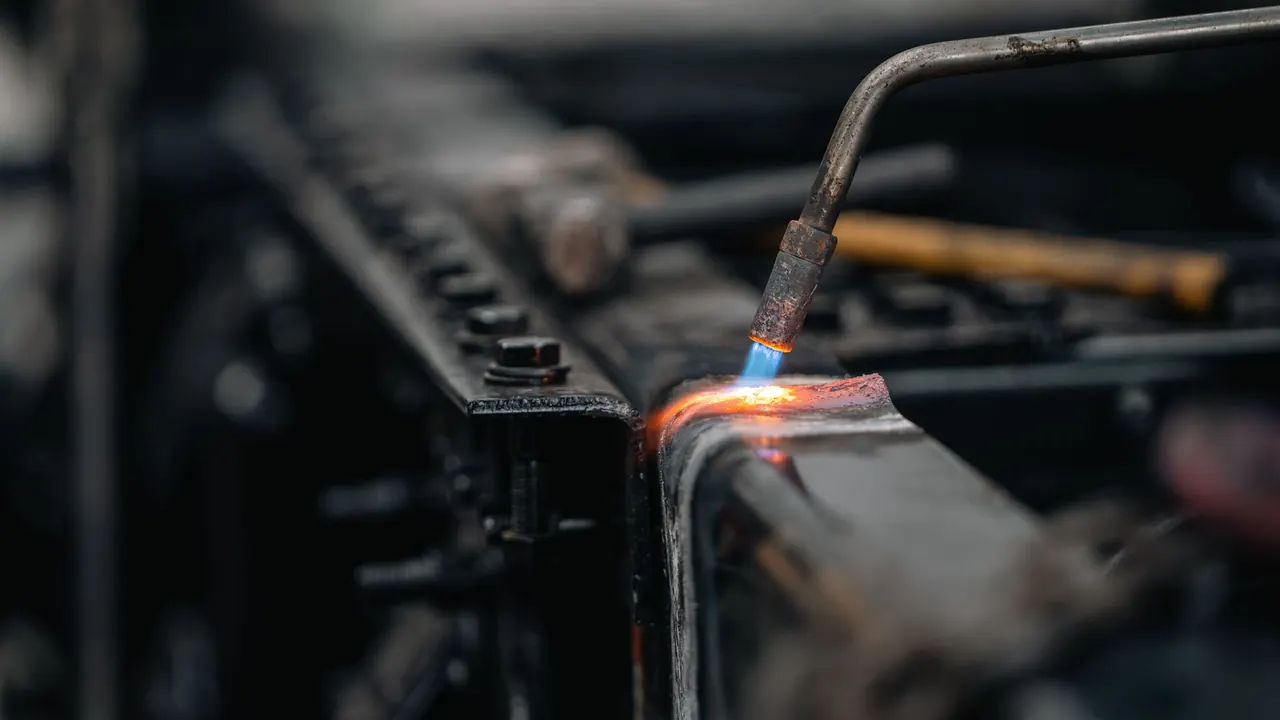
Every call follows the same five steps, whether it is a mini split freezing up in Ravenswood or a rooftop unit short-cycling in River North. Here is how the visit runs from your first call to the final test.
We ask what the system is doing, what thermostat you have, and when it started. That five-minute call tells us whether to send a tech with refrigerant gear or a control-board kit, and it lets us give you a realistic arrival window. You get a text when the tech rolls.
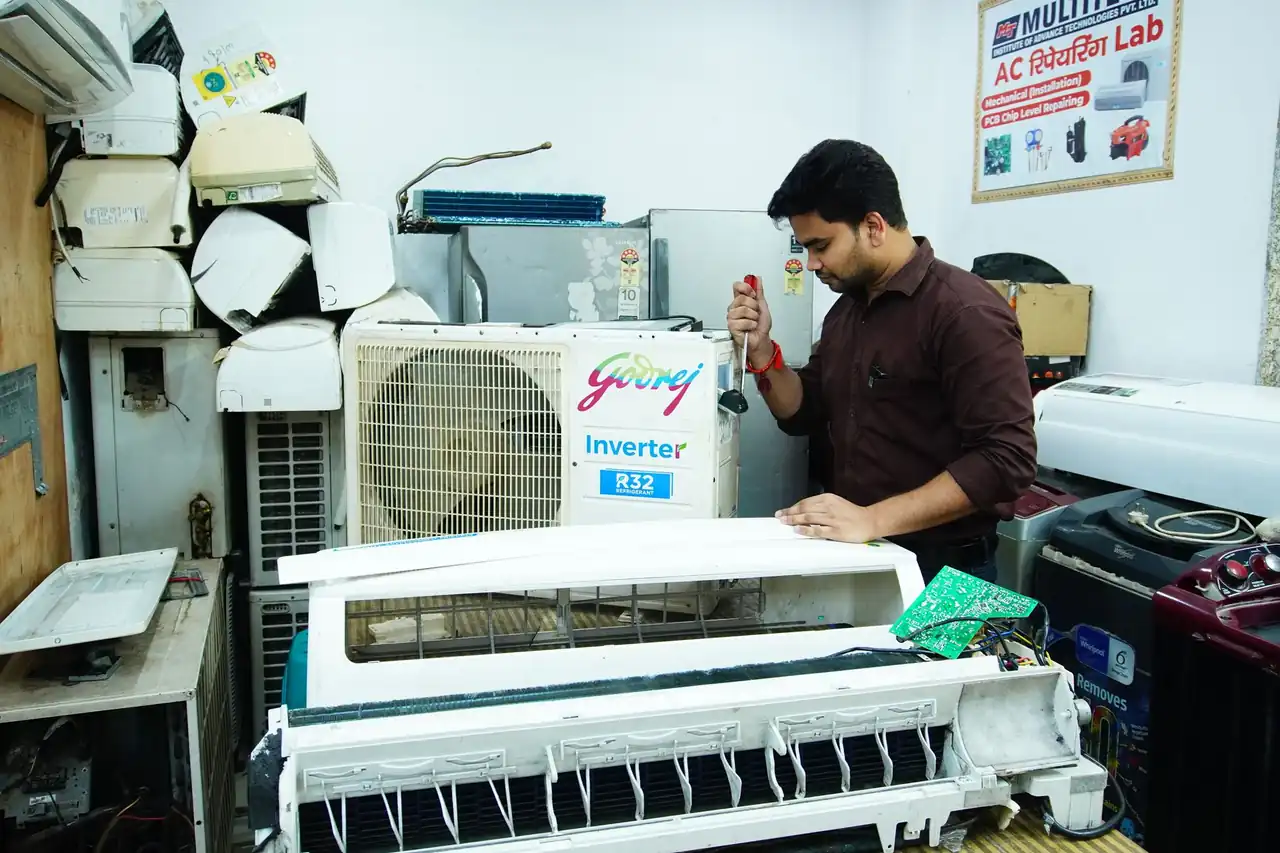
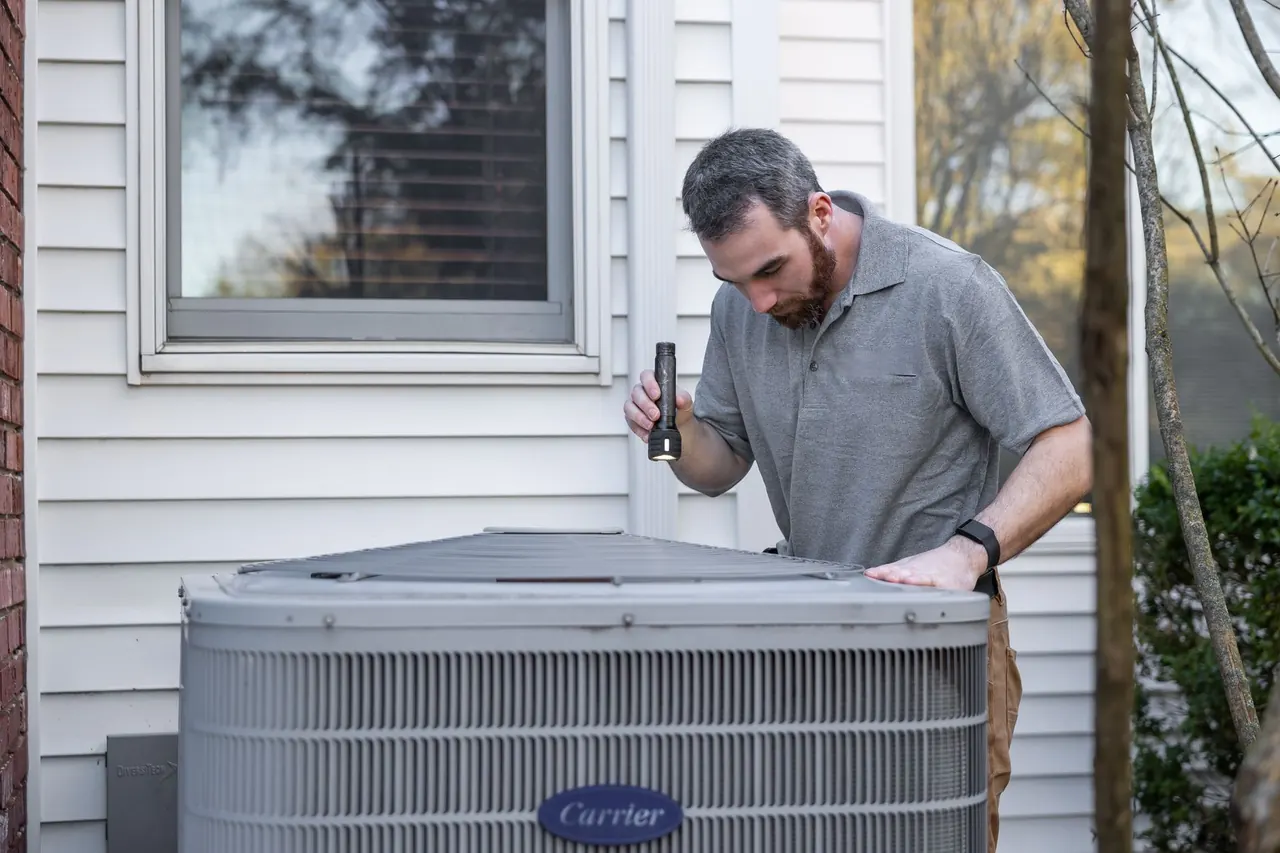
The tech walks the indoor and outdoor units, checks the air filter, and looks for ice, oil traces, or burn marks. We read pressures with a manifold gauge set and check amp draw on the compressor and blower with a digital multimeter. This takes about 20 minutes.
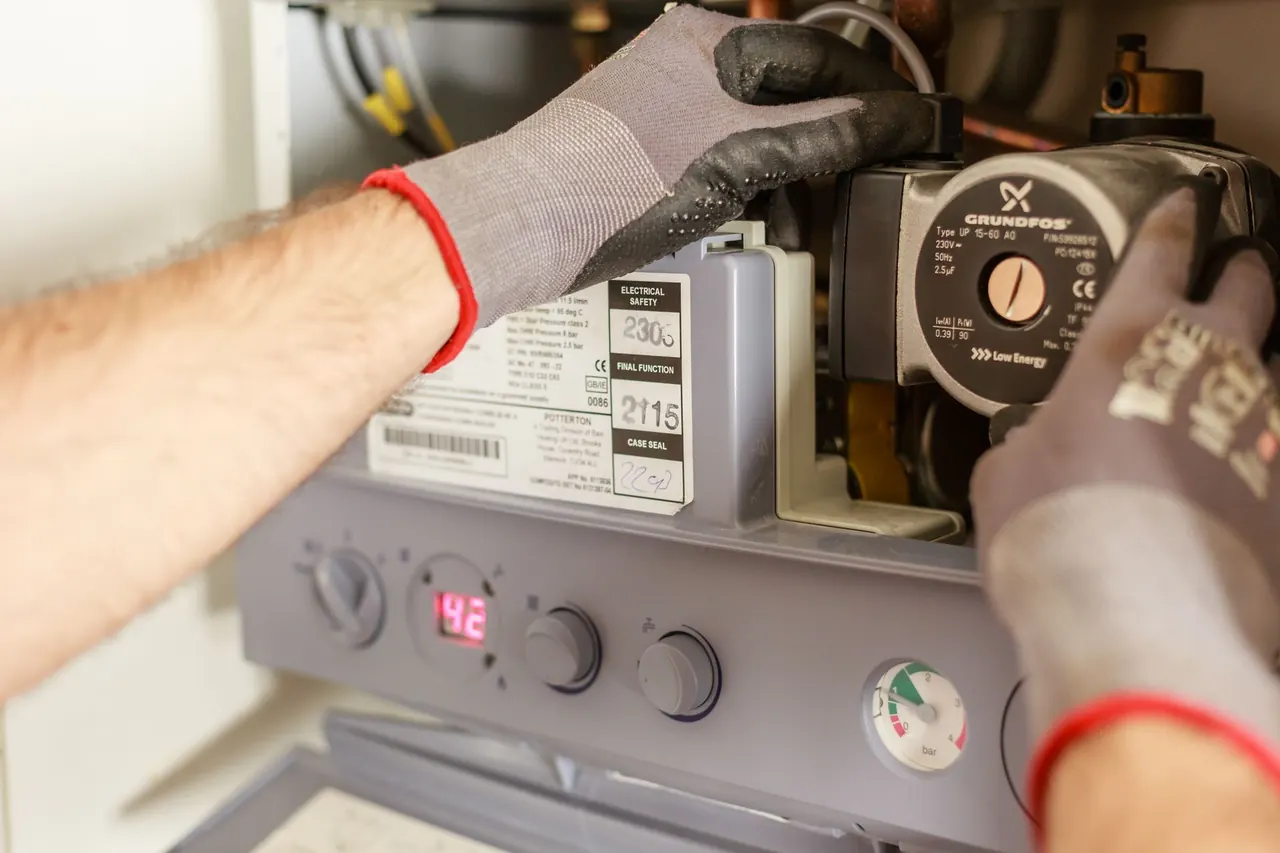
We confirm the failure instead of guessing. An electronic refrigerant leak detector finds charge loss, a thermal imaging camera spots a failing compressor winding or a hot breaker, and an anemometer measures airflow at the registers. You get a plain-English explanation of what broke and why.
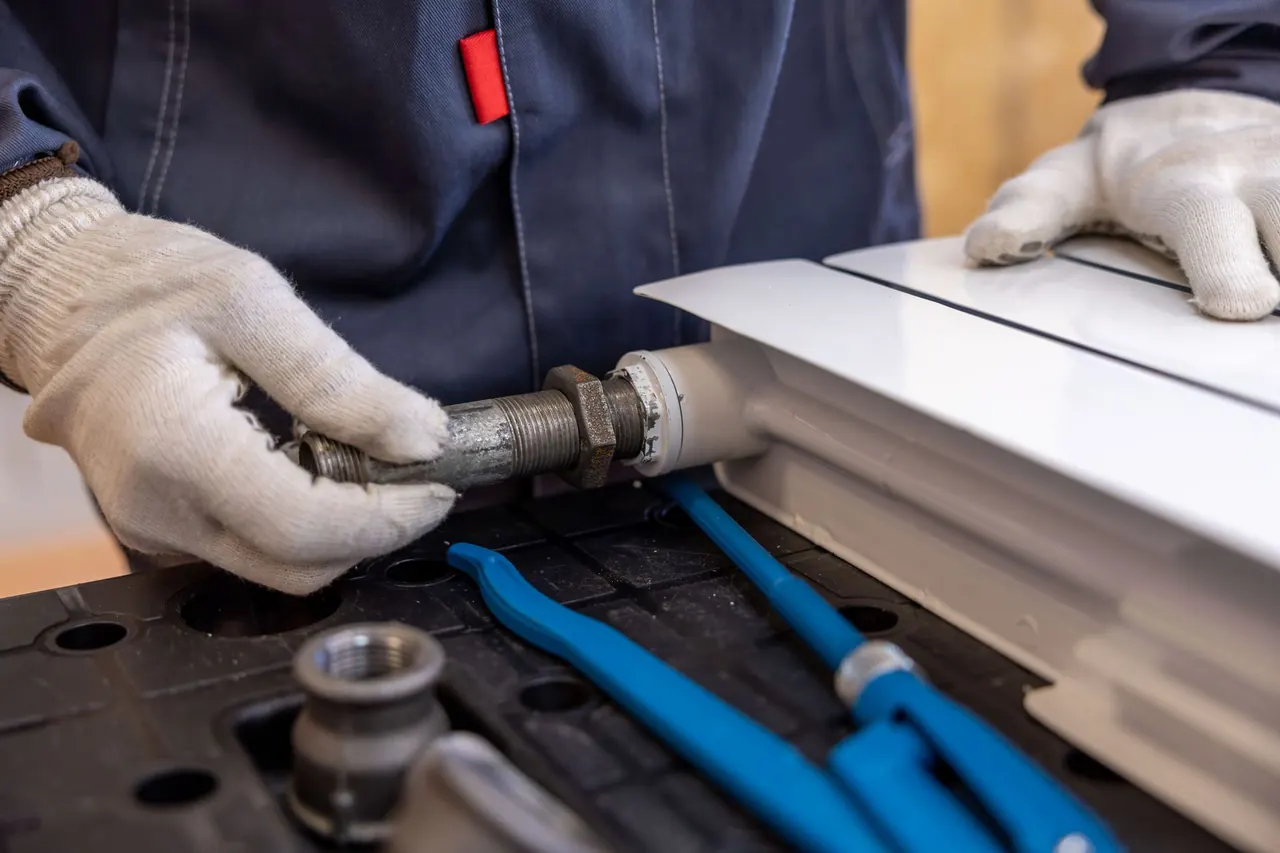
Once you approve the price, we make the repair: recharge with R-410A or R-32, swap the defrost board, clear a clogged condensate drain line, or replace the blower motor. Then we run a full heating and cooling cycle and verify the temperature split at the vents before we pack up.
We show you the failed part, the new readings, and the filter size you need. You get a service log with pressures, amp draws, and the repair performed, plus a note on what to watch for next season. If anything looks marginal, we flag it now, not at 2 a.m. in January.
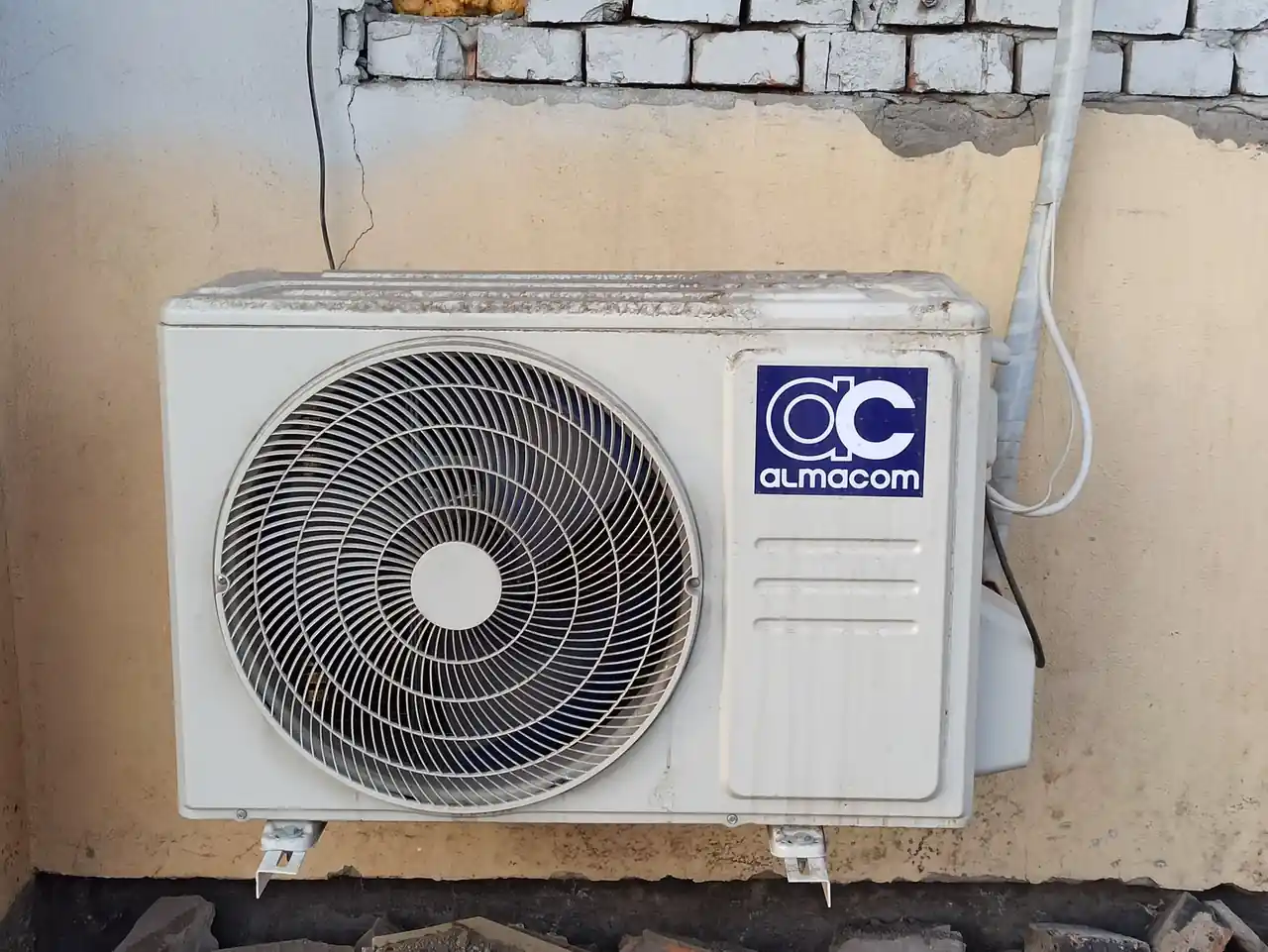
Move across a circle, or focus it and press Enter, for an illustrative thermal view of the photograph.
Reads high and low side refrigerant pressures so we can confirm charge and spot a restriction or a failing compressor before recommending parts.
Finds leaks at flare fittings, brazed joints, and Schrader ports so we repair the source instead of topping off the charge.
Pulls a deep vacuum after a repair and recovers refrigerant legally before opening the system, per EPA Section 608 rules.
Checks capacitor microfarads, contactor voltage, and amp draw, and spots hot connections or failing compressor windings that a visual check misses.
Measures airflow at the registers and static pressure in the ductwork, which tells us whether a filter or duct problem is choking the system.
Thermal views are illustrative, generated from the photographs.
Straightens bent outdoor coil fins and clears dirt and cottonwood so the unit can reject and absorb heat at rated capacity.
We follow a set order: thermostat and controls, airflow, electrical, then refrigerant. That sequence keeps us from chasing a charge problem that is really a clogged filter or a bad capacitor, and it saves you parts money.
When a system keeps failing, we check whether it was sized and ducted correctly in the first place. ACCA Manual J Load Calculation and Manual D Duct Design give us the numbers to fix the root cause, not just the symptom.
Repairs and replacements are done to ICC Mechanical Code Compliance, including clearances, condensate handling, and electrical connections. That matters for inspections and for safe operation in Chicago buildings.
A heat pump stops heating on the first hard freeze of the season in Andersonville.
We prioritize no-heat calls and dispatch a tech with defrost boards, sensors, and refrigerant. We test the defrost cycle and charge at outdoor temperature, then repair the failed part and verify heat output at the vents.
Outcome: Heat restored quickly, usually within two to four hours of arrival, and the system set up to handle the rest of the winter.
A landlord in Wicker Park gets a tenant complaint that the ductless head is blowing cool air.
We inspect the wall head, clean the coil and blower, check the flare fittings for leaks, and test charge on the line set. If a fitting is leaking, we repair it and recharge to spec.
Outcome: The tenant gets heat back, and the landlord avoids a replacement quote on a system that only needed a repair.
A homeowner in Norwood Park notices the electric bill jumped and the heat pump runs constantly.
We measure amp draw, check the charge, and test the thermostat's aux heat lockout. Short cycling and early aux heat are common culprits, and both are fixable in one visit.
Outcome: Longer, more efficient run cycles and a lower bill the following month, with the failing capacitor or sensor replaced.
A two-flat owner in Irving Park has a heat pump that ices over every few days.
We clear the ice, test the defrost sensor and board, and check for a charge issue causing the coil to run too cold. We replace the failed component and confirm the defrost cycle terminates correctly.
Outcome: The unit defrosts on schedule, the ice stops building, and the compressor is spared the wear that leads to early failure.
A condo owner in River North wants a tune-up before winter after last year's repair.
We clean the coils, test defrost and charge, check the filter and airflow, and verify the thermostat schedule. Anything marginal gets flagged with a quote before it becomes a no-heat call.
Outcome: A system that is ready for the cold and a short list of what to watch, with no surprise breakdown in January.
Chicago heat pumps face a real test: lake-effect humidity that ices outdoor coils, single-digit January nights, and long heating seasons that run from October into April. Most homes here pair a heat pump with a gas furnace or electric aux heat, so a repair often means getting both sides working together. We see ductless heads in greystones and converted attics, rooftop condensers on two-flats, and standard split systems in bungalows, and each fails differently. If you need heat pump service Chicago on a Sunday, we stock the sensors, capacitors, and R-410A that fix the majority of no-heat calls.
Before: A Carrier heat pump in Edgewater was iced solid and blowing 62-degree air. The homeowner had been running aux heat for three days, and the electric bill was climbing fast. The defrost sensor had failed and the board was not initiating a cycle.
After: We cleared the ice, replaced the defrost sensor and board, and verified the cycle terminated at the right coil temperature. Heat output came back to a 25-degree split at the vents, and the aux heat stopped running.
Keep the outdoor unit clear of snow and leaves, and change the filter every 60 to 90 days. We check defrost operation each fall so the sensor does not fail mid-winter.
Before: A ductless head in a Logan Square three-flat was blowing cool air and dripping water down the wall. The tenant had been running it nonstop. A flare fitting on the line set was leaking, and the drain line was clogged with debris.
After: We repaired the flare, pulled a vacuum, and recharged with R-410A to factory weight. The drain was cleared and tested. The head now heats the room in about 10 minutes instead of running all day.
Clean the wall-head filter monthly and have the coil and drain flushed once a year. Flare fittings should be checked for oil traces at every service.
Before: A heat pump in Portage Park was cycling every six minutes and the thermostat was calling for aux heat at 40 degrees outside. The run capacitor was weak and the thermostat's lockout was set too high, so strip heat carried the load.
After: We replaced the capacitor, corrected the charge, and reset the aux heat lockout to the right balance point. Run cycles stretched to 20 minutes, and the next month's electric bill dropped noticeably.
Have the capacitor microfarads checked at each tune-up and keep the thermostat schedule matched to your occupancy. A weak capacitor is cheap to replace and expensive to ignore.
Most no-heat calls trace back to a handful of failures. Here are the ones we see most in Chicago, what they cost you if ignored, and how we correct them.
A correctly repaired heat pump heats reliably and runs cheaper all winter.
We hold prompt heat pump repair Edgewater Chicago slots for no-heat calls, and most jobs are finished in two to four hours. You get a call when the tech is on the way, not a four-hour window with no update. If the part is on the truck, you sleep warm that night.
Chicago winters push heat pumps past their rated balance point. We test defrost cycles, aux heat lockout, and refrigerant charge at real outdoor temperatures, then set the thermostat so the system stops leaning on expensive strip heat. That is cold climate heat pump repair Chicago done to spec.
You approve the number first.
Our vans carry run capacitors, hot surface igniters, flame sensors, thermostats, and common control boards for Carrier, Goodman, and Mitsubishi Electric units. That cuts the second-trip wait that leaves you cold for days. If we need a factory part, we tell you the ETA up front.
Clear records you can keep and share.
Pressures, amp draws, repair performed
What failed and what replaced it
Correct size and change interval
Items to check next season
Age, repair history, and refrigerant type decide whether a heat pump is worth fixing or better replaced.
A single failed part on a younger system
Aging system with a mid-size fault
Major failure on an old system
A list like this tells people straight away whether you cover their street. Not listed? Call and ask: it only takes a minute.
Based in Chicago and covering the places around it. Pick one for local details.
A run capacitor or defrost sensor sits at the low end; a refrigerant leak search and recharge or a blower motor replacement pushes toward the top. Compressor replacement is a bigger job and we quote it separately after testing.
Yes, modern cold-climate heat pumps heat reliably down to about 5 to 13 degrees Fahrenheit, and they keep running below that with electric aux heat. The key is a correct charge, a working defrost cycle, and a thermostat set up for your balance point. We tune all three so your system is not leaning on strip heat all winter.
The four most common causes we find are a failed defrost sensor leaving the outdoor coil iced, low refrigerant charge from a leak, a bad reversing valve, and a clogged air filter choking airflow. Any of them will make the system blow cool air. We test each in order and fix the actual fault, usually quickly.
A well-maintained heat pump lasts 12 to 18 years here, and the Chicago climate puts you at the shorter end without annual service. Salt air is not a factor, but heavy heating demand and freeze-thaw cycling on the outdoor unit are. Yearly coil cleaning and filter changes are what get you past 15 years.
Other services from the same team.
No heat is not something to wait out. Call HVAC Chicago Pro at (312) 638-0812 and we will diagnose the fault, quote the repair, and get your system heating again. Prompt slots go fast when the temperature drops.
Call (312) 638-0812 or email info@hvacchicagopro.com and tell us what your system is doing. If you leave a message after hours, we'll call you back with a plan.