AC Leaking Water Inside the House: Causes and Fixes
A puddle under the furnace or a stain on the ceiling during a heat wave usually means your air conditioner's condensate water is not draining. Here is where that water comes from, the most common causes of leaks and how to stop the damage fast.
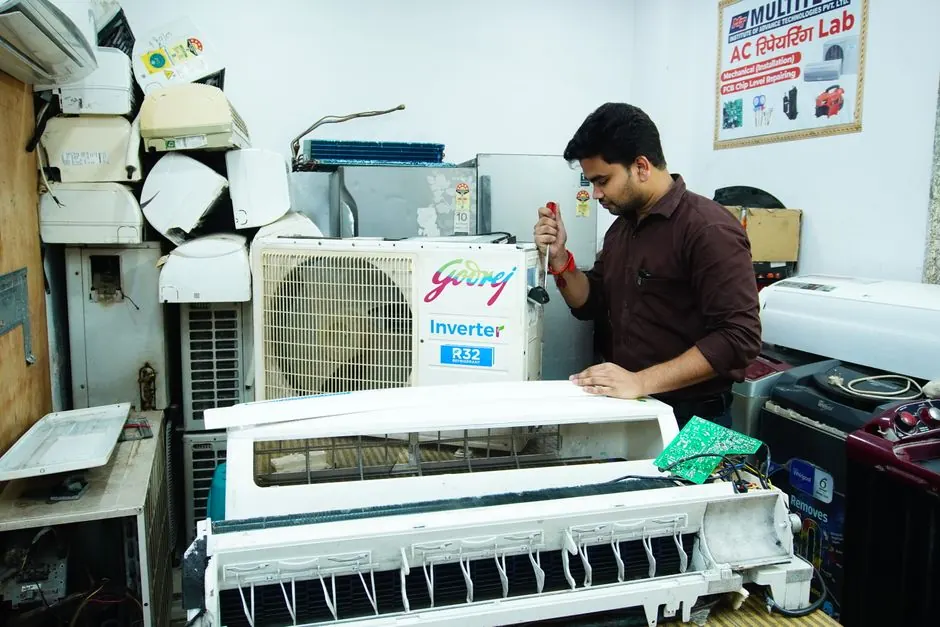
Few HVAC problems cause as much damage as quickly as an air conditioner leaking water inside the house. A small drip turns into a puddle around the furnace, a soaked basement carpet or, in a two-flat or condo with an attic or closet air handler, a brown stain spreading across the ceiling below. During a humid Chicago summer, an AC can pull gallons of water out of the air every day, and all of that water has to go somewhere.
This guide explains where AC water comes from, the most common reasons it leaks, what you can safely check, and when to call for AC repair.
Where the Water Comes From
Air conditioners do two jobs: they cool the air and they dehumidify it. When warm, humid air passes over the cold evaporator coil, moisture in the air condenses on the coil, the same way water beads on a cold glass of lemonade. That water drips into a drain pan under the coil and flows out through a condensate drain line, usually to a floor drain, a laundry sink, a condensate pump or outside.
On a humid day the amount of water can be significant. When everything works, you never notice it. When any part of that path fails, the water ends up on your floor.
First Steps When You Find a Leak
- Turn the cooling off at the thermostat so no more condensate forms.
- Keep water away from electrical equipment. If water is near the furnace controls, outlets or a condensate pump, switch the furnace off at its service switch or breaker.
- Soak up standing water with towels or a wet-dry vacuum.
- Check ceilings below an air handler in an attic or closet. If a ceiling is sagging with water, keep people away from it.
- Look for ice. If the coil or refrigerant lines are frozen, the leak may be meltwater. See our guide on why AC coils freeze.
Cause 1: A Clogged Condensate Drain Line
This is the most common cause by far. The condensate line is a small pipe, often 3/4-inch PVC, and it is a dark, damp environment. Over time, algae, mold, sludge and dust build up inside and block the flow. When the line clogs, water backs up into the drain pan, overflows and leaks out around the furnace or air handler.
Signs of a clogged line include water around the base of the indoor unit, a full drain pan, a musty smell, or a system that shuts off on its own because a safety float switch has tripped.
How Homeowners Often Clear It
Many condensate lines can be cleared with a wet-dry vacuum:
- Turn the system off.
- Find where the line ends, often at a floor drain, sink, or outside near the foundation.
- Seal the vacuum hose around the end of the line with your hand or a rag and run the vacuum for a minute or two to pull the clog out.
- Check that water drains freely from the pan afterward.
Some systems have a cleanout tee near the indoor unit with a removable cap. Follow the manufacturer's guidance before pouring anything into the line, because some cleaning products can damage pans or coils. If the line is inaccessible, the clog keeps coming back, or you are not comfortable with the job, call a technician.
Cause 2: A Damaged or Rusted Drain Pan
The drain pan sits under the evaporator coil and catches condensate. Older metal pans rust through, and plastic pans can crack with age and temperature changes. A pan that leaks will drip even if the drain line is clear. A technician can inspect the pan, and some systems have a secondary or auxiliary pan that can be replaced more easily than the primary.
Cause 3: A Failed Condensate Pump
If the indoor unit is in a basement with no floor drain nearby, a small condensate pump collects the water and pumps it up and out through a tube. Pumps fail in several ways: the motor burns out, the float sticks, the check valve clogs or the discharge tubing gets kinked or blocked. When the pump stops, its reservoir overflows onto the floor.
Signs of pump trouble include a full reservoir, a pump that hums but does not pump, or a pump that never runs at all. Make sure it is plugged in and the outlet works. Many pumps have a safety switch that can shut off the AC when the reservoir is full. Replacement pumps are common and relatively inexpensive, but they should be installed with the safety switch wired correctly.
Cause 4: A Frozen Evaporator Coil
When an AC freezes, ice builds up on the coil. When the system cycles off or the ice melts, a large amount of water comes off all at once, sometimes faster than the pan and drain can handle, or outside the pan entirely. Frozen coils usually come from low airflow, such as a dirty filter, or from low refrigerant caused by a leak. Fixing the leak in this case means fixing the freezing.
Cause 5: A Disconnected or Poorly Sloped Drain Line
Condensate lines need to slope downhill so gravity carries the water away. Lines that sag, were installed nearly flat, or have come loose at a fitting will leak or hold standing water that encourages clogs. This is common after other work in a basement, when a line is bumped or moved. A technician can reattach and resupport the line with proper slope.
Cause 6: A Missing or Faulty Trap
Many indoor units need a trap in the condensate line so air pressure from the blower does not prevent water from draining. A missing, dry or incorrectly built trap can cause water to spit out of the pan or overflow while the blower runs. This is usually an installation issue and should be corrected by a professional.
Cause 7: Condensation on Ducts and Refrigerant Lines
Sometimes the water is not coming from the drain system at all. Cold supply ducts and the larger copper refrigerant line run below the dew point of humid basement or attic air, so they sweat. If insulation is missing or damaged, drips form on the outside of the ducts and lines and fall onto ceilings or floors. Chicago basements in July are often humid enough to make this noticeable. Replacing missing insulation and controlling basement humidity usually solves it.
Cause 8: A Dirty Filter or Low Airflow
Low airflow is a double problem. It can freeze the coil, and even when it does not, it can make condensate blow off the coil in unexpected ways. Replacing the filter is quick and inexpensive, and it should be one of the first things you do.
Cause 9: A Tripped or Missing Safety Float Switch
Many systems have a float switch in the drain pan or condensate line that shuts off the AC when water backs up. If your AC stopped cooling and you find water in the pan, the switch may have done its job. Do not bypass it. Clear the drain, and the switch should reset as the water level drops. If your system has no float switch, especially with an attic or closet air handler above living space, ask a technician about adding one. It is inexpensive protection against ceiling damage.
How to Tell the Causes Apart
- Water in the pan, pan overflowing: usually a clogged line, trap problem or failed pump.
- Pan dry but water under the unit: often a cracked pan, disconnected line or condensation on the outside of the cabinet or lines.
- Ice on the coil or lines: a freezing problem from low airflow or low refrigerant.
- Drips along a duct run away from the unit: sweating ducts with missing insulation.
- Pump reservoir full: pump failure or blocked discharge tube.
Damage to Watch For
Even after a leak is fixed, check for hidden damage. Water can soak into subfloors, drywall, ceiling joists and insulation. Mold can start growing within a day or two in damp, warm conditions. Dry wet areas thoroughly with fans and a dehumidifier, and replace soaked insulation or drywall if it does not dry out. A persistent musty smell after a leak is a sign that moisture remains somewhere. Our guide to strange AC smells covers odors in more detail.
Preventing AC Water Leaks
- Have the condensate line, trap, pan and pump checked during a spring tune-up. See our tune-up and maintenance page.
- Change filters on schedule.
- Keep the area around the indoor unit clear so leaks are noticed early.
- Install a float switch if your system does not have one.
- Make sure ducts and refrigerant lines in humid spaces are insulated.
- Run a dehumidifier in damp basements during summer.
Leaks From Ductless Mini-Splits and Window Units
Central systems are not the only air conditioners that leak. Ductless mini-split wall units collect condensate in a small tray behind the cover and drain it through a thin line that runs outside or to a small pump. When that line clogs, kinks or loses its slope, water drips down the wall below the indoor head. Dirty filters on the indoor unit can also cause icing and dripping. Cleaning the filters is a homeowner task, but clearing the internal tray and drain line usually needs a technician. See our ductless mini-split repair page.
Window air conditioners are designed to drain water outside. If one is dripping inside, it is often tilted the wrong way. The back of the unit should sit slightly lower than the front so condensate runs out the rear. A clogged drain hole or a frozen coil from a dirty filter can also cause indoor drips.
Who to Call: HVAC Technician or Plumber?
Because AC leaks involve water, homeowners sometimes call a plumber first. If the water is coming from the air conditioner's drain pan, condensate line, pump or coil, an HVAC technician is the right call, since the fix often involves the indoor unit, the coil or the system's safety switches. If the condensate line drains into a floor drain or laundry sink that is itself backing up, a plumber may be needed for the building drain. When in doubt, describe where the water appears and whether the AC is running, and the HVAC company can help you decide.
When to Call for AC Repair in Chicago
Call a technician if the leak returns after you clear the drain, the drain pan is cracked or rusted, the condensate pump has failed, the coil is freezing, or water is reaching ceilings or electrical equipment. Call (312) 638-0812 for service in neighborhoods such as Lakeview, River North and Gold Coast, where many condos have air handlers in closets above finished space. If your AC is also not turning on, see our checklist for an AC that won't turn on.