Ice on Your AC Lines? Why Coils Freeze and What to Do
Ice on an air conditioner sounds backwards, but it is one of the most common summer service calls. Here is why AC coils and lines freeze, how to thaw the system without damaging it, and how to tell a simple airflow problem from a refrigerant leak.
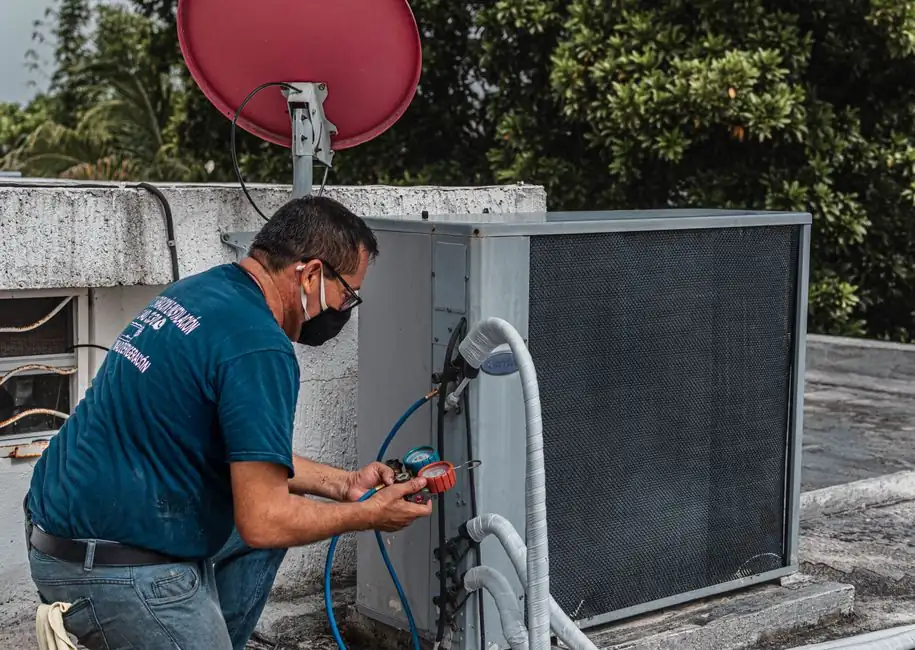
It is a hot Chicago afternoon, the AC has been running for hours, and the house is still warm. You check the outdoor unit or the furnace in the basement and find frost or a thick layer of ice on the copper refrigerant lines. Ice on an air conditioner seems like a contradiction, but it is one of the most common summer HVAC problems, and it is a clear sign that something is out of balance.
This guide explains why AC coils and lines freeze, what to do the moment you see ice, the checks you can safely make yourself, and when a frozen system points to a refrigerant leak or another problem that needs AC repair.
How an Air Conditioner Is Supposed to Work
A central air conditioner moves heat from inside your home to the outside. Refrigerant flows through a loop between the indoor coil, called the evaporator, and the outdoor unit, called the condenser.
- Inside, warm air from your home blows across the cold evaporator coil. The refrigerant absorbs heat from the air, and the air leaves the coil cooler and drier.
- The moisture pulled out of the air condenses on the coil and drips into a drain pan, then out through a condensate line.
- The refrigerant carries the heat to the outdoor unit, where the compressor and condenser coil release it outside.
When everything is working, the evaporator coil runs cold but stays above freezing. The steady flow of warm household air keeps it there. When that balance breaks, the coil temperature can drop below 32 degrees Fahrenheit. The moisture that should drain away freezes on the coil instead, and the ice can spread back along the suction line to the outdoor unit.
What to Do the Moment You See Ice
If you find ice on the indoor coil, the refrigerant lines or the outdoor unit:
- Turn the cooling off. Set the thermostat from Cool to Off.
- Turn the fan on. Set the fan switch to On. Moving warm indoor air across the coil helps melt the ice faster.
- Protect against water. As the ice melts, a lot of water can come off the coil at once. Check that the drain pan and condensate line are clear, and put towels down around the indoor unit if needed.
- Wait for a full thaw. Light frost may clear in an hour or two. Heavy ice can take several hours or longer.
- Do not chip, scrape or heat the ice. The coil fins and copper lines are delicate. A screwdriver, ice pick or heat gun can puncture a coil or line and turn a simple problem into a major repair.
Running the AC while it is frozen is a bad idea. A frozen coil cannot absorb heat, so the house will not cool anyway, and the compressor can be damaged if liquid refrigerant returns to it instead of vapor.
Cause 1: A Dirty Air Filter
The most common reason an air conditioner freezes is restricted airflow, and the most common cause of restricted airflow is a dirty filter. When less air moves across the evaporator coil, the coil absorbs less heat, its temperature drops, and moisture freezes on the surface.
Pull the filter and hold it up to a light. If you cannot see light through it, replace it. In a Chicago summer, with windows opening and closing, pollen and construction dust, a standard 1-inch filter can load up faster than you expect. Our guide on HVAC maintenance covers filter schedules.
Cause 2: Blocked Returns or Closed Vents
Airflow can also be restricted by:
- Return air grilles blocked by furniture, rugs or curtains.
- Too many supply registers closed in unused rooms.
- Collapsed or disconnected flexible ducts.
- Undersized return ductwork, which is common in older Chicago homes where central air was added to a system designed only for heat.
Open supply registers throughout the house and make sure return grilles are clear. Closing vents to push more air elsewhere usually backfires. It raises pressure in the duct system and reduces total airflow across the coil.
Cause 3: A Dirty Evaporator Coil
Even with good filters, the evaporator coil collects dust over time. A layer of dirt on the coil insulates it and blocks airflow between the fins. The coil gets colder and can freeze. Dirty coils also make the system less efficient and can contribute to musty odors. Coil cleaning is part of a thorough tune-up and should be done by a technician, because the coil is usually sealed inside the furnace plenum and the fins bend easily.
Cause 4: Blower Motor or Fan Problems
In most Chicago homes with central air, the furnace blower pushes air across the AC coil. If the blower is running slowly or not at all, the coil freezes quickly. Possible causes include:
- A failing blower capacitor that leaves the motor running weakly.
- A worn or slipping belt on older belt-driven blowers.
- A dirty blower wheel that moves much less air than it should.
- A fan speed setting that is too low for cooling.
- A failing blower motor.
If you set the fan to On and feel little or no air from the registers, the blower is a strong suspect. That is a job for a technician. Our post on AC running but not cooling covers related airflow problems.
Cause 5: Low Refrigerant From a Leak
Air conditioners do not use up refrigerant the way a car uses gas. The system is sealed. If the refrigerant charge is low, there is a leak somewhere.
Low refrigerant lowers the pressure in the evaporator coil, and lower pressure means a lower temperature. The coil can drop below freezing even with good airflow. Signs of a refrigerant leak include:
- Ice that comes back soon after you thaw the system and replace the filter.
- Gradually weaker cooling over weeks or months.
- A hissing or bubbling sound near the indoor or outdoor coil.
- Oily residue on refrigerant line fittings or the coil.
- Higher electric bills because the system runs longer.
A good technician will find the leak, repair it, pull a vacuum and recharge the system to the manufacturer's specification. Simply topping off refrigerant without fixing the leak is a temporary fix at best. Refrigerant handling also requires EPA certification, so this is never a DIY job.
A Note on Older R-22 Systems
Many older Chicago air conditioners use R-22 refrigerant, which has been phased out of production in the United States. Remaining supplies are limited and expensive. If an older R-22 system has a significant leak, repairing and recharging it can cost enough that replacement deserves a serious look. Our guide on whether to repair or replace your AC walks through that decision.
Cause 6: Running the AC When It Is Too Cool Outside
Air conditioners are designed for warm weather. Running central air on a cool night, which happens in Chicago in late spring and early fall, can lower the evaporator coil temperature enough to freeze. Many manufacturers recommend not running the AC when outdoor temperatures drop below roughly the low 60s. If your system froze on a cool evening, that may be the whole explanation. Open windows instead on mild nights.
Cause 7: A Clogged Condensate Drain
A blocked condensate line does not usually cause freezing directly, but it often shows up at the same time. When the coil thaws, a clogged drain means all that water has nowhere to go. It can overflow the drain pan and leak onto the floor or ceiling. If water is leaking from your indoor unit, see our guide on AC leaking water inside the house.
Cause 8: Thermostat or Control Problems
A thermostat set very low, combined with long run times on a humid day, can push a system with marginal airflow into freezing. Thermostats that are wired incorrectly or relays that stick can also keep the compressor running when it should cycle off. If ice keeps returning and airflow checks out, a technician will look at controls as well as refrigerant.
What You Can Safely Check After the Ice Melts
Once the system has thawed completely:
- Replace the air filter.
- Open all supply registers and clear return grilles.
- Check that the indoor unit's drain pan and condensate line are draining.
- Set the fan to On and feel for strong airflow at several registers.
- Make sure the outdoor unit is not blocked by plants, debris or stored items, and that the coil is not matted with cottonwood fluff, which is common in early summer around Chicago.
- Restart cooling and check after an hour or two for any frost on the lines.
If the ice comes back, stop running the AC and call for service. Repeated freezing usually means a refrigerant leak, a blower problem or a dirty coil, and each of those needs a technician.
What a Technician Will Do
A thorough diagnosis for a freezing AC typically includes:
- Measuring airflow and static pressure in the duct system.
- Inspecting and cleaning the evaporator coil if needed.
- Checking the blower motor, capacitor and wheel.
- Measuring refrigerant pressures, superheat and subcooling to judge the charge.
- Searching for leaks with electronic detectors, bubble solution or other methods if the charge is low.
- Checking the condensate drain and safety float switch.
- Testing the thermostat and controls.
You should get a clear explanation of the cause and written options before work starts.
How to Prevent AC Freezing
Most frozen-coil calls can be prevented with basic care:
- Change filters on schedule, especially during heavy cooling months.
- Keep registers open and returns clear.
- Schedule a spring AC tune-up so the coil, blower, refrigerant charge and drain are checked before the first heat wave.
- Avoid running central air on cool nights.
- Keep the outdoor unit clear of debris and vegetation.
Frozen Heat Pumps vs. Frozen Air Conditioners
If your home uses a heat pump instead of a central air conditioner, frost on the outdoor unit in winter is a different situation. Heat pumps regularly build up frost when heating in cold weather and run a defrost cycle to clear it. That is normal. Heavy ice that never clears, or ice in summer cooling mode, is not. The summer causes are the same ones covered above: airflow, refrigerant and controls. If you are unsure which type of system you have, check the outdoor unit's label or ask a technician during your next visit.
Get Help With a Frozen AC in Chicago
If your air conditioner keeps freezing, cools poorly after thawing, or shows signs of a refrigerant leak, call (312) 638-0812. A technician can find the real cause, whether it is airflow, a dirty coil, a failing blower or a leak, and explain your options. Service is available in neighborhoods including Lincoln Park, Wicker Park and Edgewater. Learn more about AC repair or, for older systems, AC replacement.