Spring AC Tune-Up Checklist
Chicago's first hot spell tends to arrive suddenly, and that is when weak capacitors, clogged drains and dirty coils show up. This spring checklist covers what you can do yourself, what a professional tune-up should include and the warning signs to fix before summer.
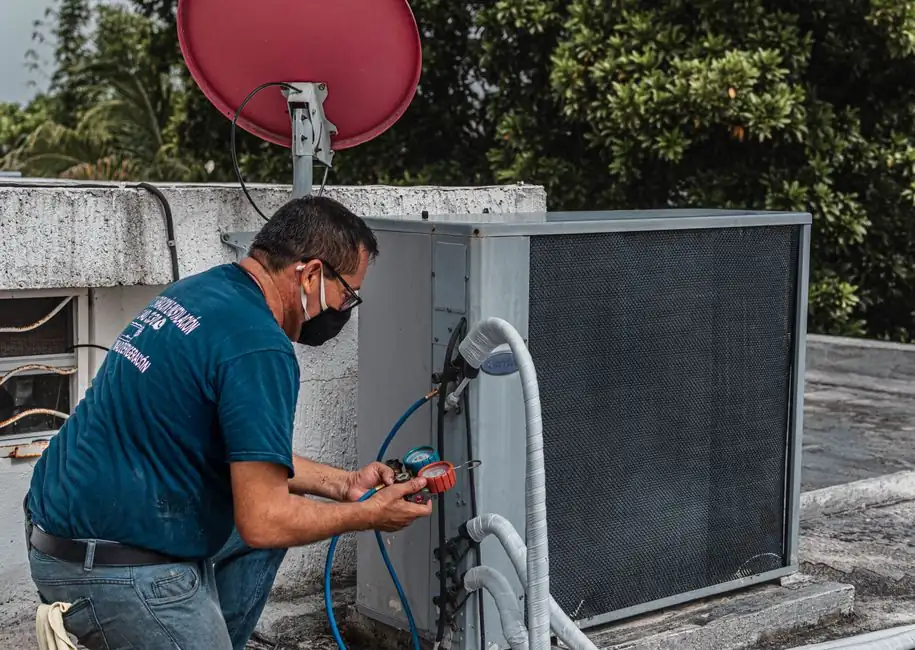
In Chicago, spring can swing from snow flurries to 85 degrees in a week. The first truly hot day is when every air conditioner in the city gets switched on at once and when HVAC companies are flooded with calls. Many of those calls are preventable. A dead capacitor, a clogged drain line or a coil matted with cottonwood fluff can all be caught in a spring checkup.
This checklist covers what you can do yourself, what a professional tune-up should include and the warning signs that mean it is time for AC repair before summer arrives.
1. Replace the Air Filter
In most Chicago homes, the furnace blower moves air for both heating and cooling, so the same filter serves both. Start the cooling season with a fresh filter. A clogged filter reduces airflow across the AC coil, which can cause the coil to freeze, reduce cooling and raise electric bills. Our guide on changing filters covers schedules and MERV ratings.
2. Remove Any Winter Cover
If you covered the outdoor unit for winter, remove the cover completely before running the AC. Running with a cover on blocks airflow and can damage the compressor. Many technicians recommend avoiding full covers altogether because they trap moisture. A top-only cover that keeps debris out while allowing airflow is a common compromise.
3. Clear Around the Outdoor Unit
- Remove leaves, branches and debris from around the base and on top of the unit.
- Trim shrubs and plants so there is clear space around the unit, often a couple of feet, and more above.
- Move stored items, grills and trash cans away.
- Check that the unit sits level on its pad. A tilted pad can stress refrigerant lines.
4. Gently Clean the Outdoor Coil
The outdoor coil releases heat from your home. When it is dirty, the AC works harder and less efficiently. In Chicago, late spring cottonwood fluff can mat across coils like a blanket.
- Turn off power at the outdoor disconnect and the breaker.
- Use a garden hose with a gentle spray to rinse the coil. Rinse from the outside, or from the inside out if you can access it safely without disturbing wiring.
- Do not use a pressure washer. It can flatten the delicate fins.
- Straighten minor bent fins carefully with a fin comb if you have one, or leave it to a technician.
5. Inspect the Refrigerant Lines
Two copper lines connect the outdoor unit to the indoor coil. The larger one should be insulated. Replace insulation that is cracked, missing or chewed by animals, because bare lines sweat and lose efficiency. Look for oily spots on fittings, which can indicate a refrigerant leak, and report them to a technician.
6. Check the Condensate Drain
Your AC removes moisture from the air, and that water drains through a condensate line, often to a floor drain or condensate pump. Before summer:
- Find where the line ends and make sure it is not clogged or disconnected.
- If your system has a condensate pump, pour a little water into the reservoir and confirm the pump runs.
- Check for a float switch that will shut off the AC if water backs up.
A clogged drain is one of the most common summer service calls. Our guide on AC leaking water explains how to clear one.
7. Test the Thermostat
- Replace thermostat batteries if needed.
- Switch from Heat to Cool.
- Set the fan to Auto.
- Set summer schedules.
8. Do a Test Run on a Mild Day
Choose a day that is at least in the mid-60s or warmer. Running central air on a cool day can freeze the coil. Set the thermostat several degrees below room temperature, then check:
- The indoor blower runs and air flows from registers.
- The outdoor unit starts within a few minutes, and its fan spins.
- Air at the registers feels noticeably cooler within about 15 minutes.
- Warm air blows out of the top of the outdoor unit.
- There are no unusual noises, burning smells or vibration.
If the outdoor unit hums but the fan does not spin, nothing happens at all, or the breaker trips, see our guide on AC won't turn on and call for service.
9. Check the Indoor Unit
Look at the indoor coil area above the furnace for water stains, rust or ice. Make sure the blower door is secure. Listen for rattles. If your AC uses an air handler in an attic or closet, check the secondary drain pan for water.
10. Open Registers and Clear Returns
Open supply registers throughout the home and make sure return grilles are clear. For two-story homes, some people partially close first-floor registers in summer to push more air upstairs, but closing too many can reduce total airflow and freeze the coil. Make changes modestly.
11. Schedule a Professional Tune-Up
A professional spring tune-up covers checks that require tools and training. It typically includes:
- Cleaning and inspecting the outdoor coil.
- Inspecting the indoor coil and drain pan.
- Measuring refrigerant pressures, superheat and subcooling to judge the charge.
- Testing the capacitor, contactor and electrical connections.
- Checking motor amperage and voltage.
- Inspecting the outdoor fan motor and blades.
- Checking blower operation and airflow.
- Flushing and testing the condensate drain and float switch.
- Measuring temperature drop across the indoor coil.
- Checking thermostat operation.
Capacitors are one of the most common failures on the first hot days. A technician can test them under load and replace a weak one before it fails. Learn more on our tune-up and maintenance page.
12. Think About the Future
If your AC is 12 to 15 years old or more, used R-22 refrigerant, struggled last summer or needed repeated repairs, spring is the time to plan. Get an assessment and, if appropriate, replacement quotes before the busy season. Our guides on repair or replace and AC sizing can help.
Do Not Forget Ductless Units and Window ACs
If you have ductless mini-splits, clean the indoor filters, clear the outdoor unit and test each zone. Window air conditioners need their filters cleaned, a check for mold or debris, and correct installation with a slight tilt so water drains outside. See our ductless mini-split repair page.
Summer Habits That Help
- Check the filter monthly during heavy use.
- Keep blinds closed on sunny windows during the hottest hours.
- Avoid big temperature setbacks that force long recovery runs on hot afternoons.
- Keep the outdoor unit clear of grass clippings and cottonwood fluff.
- Run bathroom and kitchen exhaust fans to remove moisture.
Spring Checklist for Two-Flats and Condos
In multi-unit buildings and condos, air conditioning equipment is often in less obvious places: rooftop condensers, air handlers in closets above finished ceilings, or condensers lined up in a narrow gangway. A few extra steps help:
- Check secondary drain pans under closet or attic air handlers for water or debris.
- Confirm float switches are installed where an overflow could damage a ceiling below.
- Make sure rooftop units are accessible and that roof drains near them are clear.
- Label which outdoor unit serves which apartment.
- Remind tenants to report weak cooling or leaks quickly.
Electrical Safety Around the Outdoor Unit
Outdoor units contain high-voltage components and capacitors that can hold a charge even after power is turned off. Limit homeowner work to clearing debris and gently rinsing the coil with power off at the disconnect. Do not remove access panels, touch wiring or try to test capacitors. If the disconnect box is damaged, rusted or missing its cover, have it repaired before the cooling season.
Indoor Humidity in Summer
Chicago summers can be very humid. A properly working air conditioner removes moisture as it cools, keeping indoor relative humidity in a comfortable range. If your home feels clammy even when the temperature is reached, the AC may be oversized, the airflow may be set too high for good dehumidification, or the system may be low on refrigerant. Basements often need a separate dehumidifier. A technician can measure humidity and temperature drop across the coil to see how well the system is dehumidifying.
Plan Ahead for Heat Waves
During extreme heat, even a healthy AC may run continuously and not quite reach a low setpoint on the hottest afternoons. That is normal for a correctly sized system. Help it by closing blinds on sunny windows, avoiding oven use during the day, and setting the thermostat to a reasonable temperature rather than very low. If anyone in the home is vulnerable to heat, have a plan to go somewhere cooler if the AC fails.
How Long a Spring Tune-Up Takes
A thorough AC tune-up often takes around an hour, depending on access to the outdoor and indoor units and what the technician finds. If coils need deep cleaning or a part needs replacing, it may take longer. Scheduling in April or May means you are not competing with emergency calls on the first 90-degree day, and any recommended repairs can be done while the weather is still mild.
What to Write Down After the Visit
Ask the technician to record refrigerant pressures or charge readings, capacitor readings, the condition of the coils and any parts that are wearing. Keep these notes with your home records. Comparing them year to year shows whether a slow refrigerant leak is developing or a component is weakening, which helps you plan repairs or replacement rather than being surprised in July.
Energy-Saving Tips for Chicago Summers
- Set the thermostat a few degrees higher when you are away and use a programmable or smart schedule.
- Use ceiling fans in occupied rooms so you feel cooler at a higher setting.
- Seal and insulate attic air leaks, which cut summer heat gain in many older homes.
- Shade west-facing windows during late afternoon.
Signs You Should Call Before Summer
Do not wait for peak season if you notice any of these during your spring test: the outdoor unit hums but the fan will not spin, the breaker trips, ice forms on the refrigerant lines, water appears around the indoor unit, the air at the registers is barely cooler than the room, or you smell burning. Each points to a problem that is far easier to schedule and fix in April than during the first heat wave.
Book Your Spring AC Tune-Up
Call (312) 638-0812 to schedule an AC tune-up before the first heat wave. We serve homes in neighborhoods including Wrigleyville, Bucktown and Jefferson Park.